Draft concept A design proposal for the Prima Vita Veterinary Sports Medicine Unit — not a live site. Pricing needs confirming.
PRIMAVETVeterinary Sports Medicine · Dubai
Book an assessment

Interval hypoxic training · Veterinarian-led

Four thousand metres.
Standing still.

Your horse breathes thinned air through a soft mask, in his own box, at rest. The body adapts as it would at altitude — more oxygen-carrying capacity, better lactate clearance, a stronger aerobic engine — with no load on tendon, joint or bone.

14-day programme At rest · non-invasive No training time lost
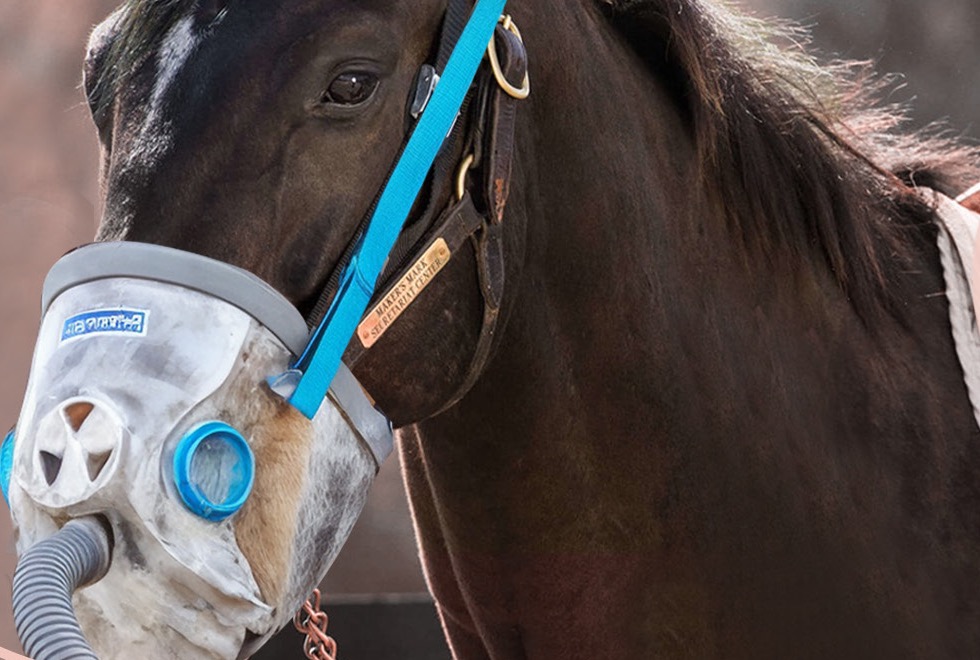
A dark bay horse standing calmly in a stable wearing a clear interval hypoxic training mask connected by a ribbed hose, with a teal headcollar.
A horse wearing the training mask during a session.
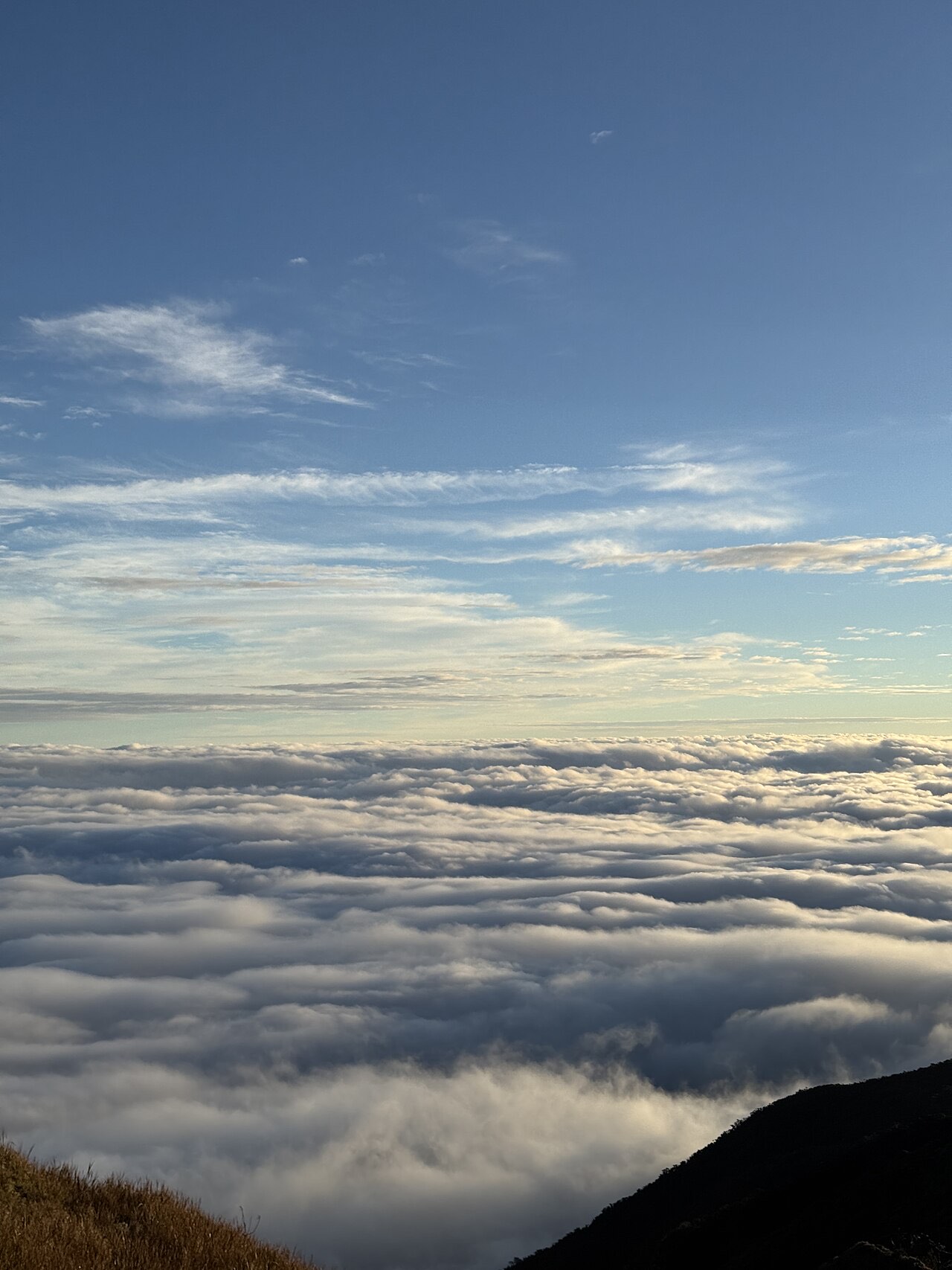
A layer of cloud seen from above at a mountain summit, stretching to a pale horizon under a soft blue sky.
Racing stables have chased altitude for decades. The horse that travels to it loses weeks of work, condition and routine. This brings the air to the horse instead.

The method

Short bursts of thin air, alternating with rich.

Interval Hypoxic Training alternates low-oxygen air with normal or oxygen-enriched air in controlled cycles. The horse stands still throughout. The stimulus is entirely physiological — nothing is asked of the musculoskeletal system.

9–16%

Hypoxia

Thinned air, equivalent to roughly 2,000–4,500 metres of altitude. The controlled shortage that triggers adaptation.

21%

Normoxia

Ordinary stable air, used as the recovery phase between intervals — and for horses in whom enriched oxygen is not indicated.

up to 33%

Hyperoxia

Oxygen-enriched air, restoring saturation quickly between intervals so the whole session is tolerated at rest.

The programme

Fourteen days, taken one step at a time.

The hypoxic depth is not fixed — it descends across the programme as the horse adapts, from roughly 2,000 metres on day one to 4,000 by the end. Drag across the chart to follow it.

14-day hypoxic ramp

Inspired oxygen and equivalent altitude

Equivalent altitude is computed from the inspired oxygen fraction using the international standard atmosphere.

Day
1
Inspired O₂
16.0%
Equivalent altitude
2,200 m
Phase
Acclimatisation
Days 1–4 · Acclimatisation Days 5–10 · Progressive load Days 11–14 · Peak stimulus
Drag across the chart, or use the slider, to step through the programme.

What the research reports

The numbers come from the literature, not from us.

The figures below are from controlled equine studies, not from our own marketing. We would rather you read them before spending anything, and we make no promise about what any individual horse will do.

28%

Run time increase

Against 10% for the same training in normal air — the control group in the same study.

12%

VO₂max

Improvement in maximal oxygen consumption, the standard measure of aerobic capacity.

15%

Cardiac output

Enhanced stroke volume at exhaustion, meaning more blood moved per beat when it matters.

In our own 14-day programme, simulating altitudes of 2,000–4,000 metres at inspired oxygen fractions between 16% and 12%, every test horse showed significant reductions in resting heart and respiratory rates, and measurable gains in performance readiness.

We recommend phased cycles of interval hypoxic training combined with tailored nutrition and recovery planning — not the training in isolation.

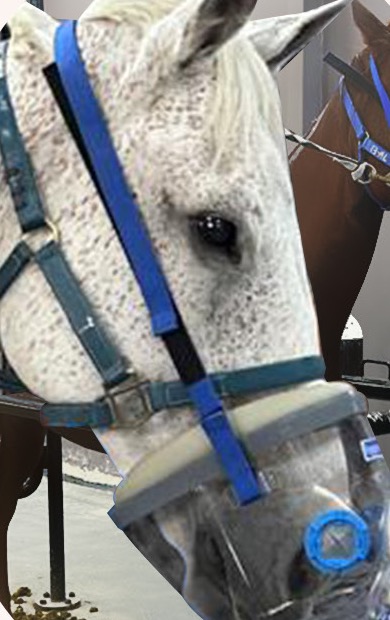
A grey horse in a treatment stall wearing a clear hypoxic training mask with blue straps, a second horse visible behind.
The horse stands in a normal stall throughout — no travel, no change of environment.

What changes inside

A shortage the body answers by rebuilding.

Controlled hypoxia activates HIF-1α — hypoxia-inducible factor — which regulates over a hundred genes associated with endurance adaptation.

Oxygen transport
erythropoiesis
Capillary density
angiogenesis
Mitochondrial density
biogenesis
Lactate clearance
MCT4 upregulation
Muscle repair
satellite cell activation
Energy metabolism
glycolytic enzyme activity

Who it suits

Two quite different jobs.

01 · Performance

Flat racing, endurance and competition horses

For breaking a plateau in a horse that is already well trained, and for building aerobic capacity without adding to an already full workload. Particularly relevant to endurance and flat yards, where the aerobic ceiling is the limiting factor and the training calendar has no spare weeks in it.

02 · Rehabilitation

Horses on box rest or restricted work

This is the case that has no real substitute. A horse recovering from injury loses cardiovascular fitness while the tendon or bone heals. Interval hypoxic training delivers a genuine cardiovascular stimulus with no mechanical load at all — fitness maintained through the months when the horse cannot work.

The literature

Where the figures come from.

Controlled study Mukai et al. — effects of interval hypoxic training on run time to fatigue, VO₂max and cardiac output in Thoroughbred horses, against a normoxic control group. 2020
In-house programme 14-day phased programme at simulated altitudes of 2,000–4,000 m (FiO₂ 16%–12%); reductions in resting heart and respiratory rates across all test horses. Prima Vita
Mechanism HIF-1α mediated adaptation — erythropoiesis, angiogenesis, mitochondrial biogenesis and MCT4-mediated lactate transport. Review
To verify before launch. The Mukai reference needs its full citation and a link, and the in-house programme should state the number of horses and the discipline. Both claims are strong; both should be checkable. The photography also needs confirming — see the note in the enquiry section.

Honestly

It does not work equally well in every horse.

Response varies, and some horses are poor responders. Protocols are adjusted individually, and where a horse is not responding we will tell you rather than sell you another block of sessions.

Depth of hypoxaemia is monitored throughout every session to avoid excessive physiological stress, and every horse is assessed by a veterinarian before the programme begins.

Optimal protocols for each discipline are still under investigation. We follow the published work and our own measurements, and we will say which is which.

Programmes

Two programmes, fifteen sessions each.

Both run at the Veterinary Sports Medicine Unit on Sheikh Zayed Road. Every programme begins with a veterinary assessment, and the protocol is set for that horse.

Mountain & Spa

AED 45,000 · 15 sessions

AED 3,000 a session.

General wellness and recovery

  • Interval hypoxic training, full protocol
  • Restorative therapies in a spa setting
  • Suited to horses in light work or between campaigns
  • Veterinary assessment included

Training & Treatment

AED 75,000 · 15 sessions

AED 5,000 a session.

Competitive and rehabilitating horses

  • Interval hypoxic training, full protocol
  • Physiology and nutrition consultations
  • Laboratory tests and IV support as needed
  • Activation and recovery therapies
  • Veterinary review through the programme
Pricing to confirm. These are the list prices from the 2025 brochure. The discounted rates shown there (AED 30,000 and AED 50,000) expired in September 2025 — tell me the current figures and I will set them.

Enquire

Start with an assessment.

Tell us the horse, the discipline and what you are trying to change. We will tell you honestly whether this is likely to help.

Photography to confirm. Both horse photographs come from your 2025 brochure. The halter plate in the hero image reads “Makers Mark Secretariat Center” — a Thoroughbred aftercare facility in Kentucky — so it was not shot at the Dubai unit. Captions make no location claim, but provenance and usage rights need checking before launch.

+971 4 321 9433

+971 50 321 9405

clinic@primavitadubai.com

This opens WhatsApp with your details ready to send. We reply within one working day.